
Understanding Your Partial Knee Replacement
A Partial Knee Replacement (also known as unicompartmental knee arthroplasty) is a surgical procedure where only the damaged part of the knee joint is replaced with an implant. This is typically recommended when arthritis is confined to only one “compartment” of your knee.
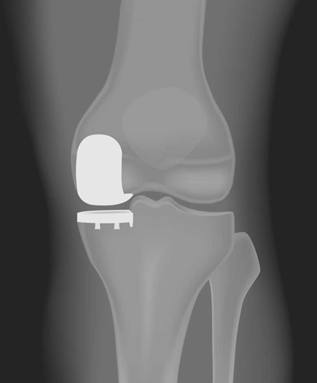
Why a Partial Replacement?
Unlike a total knee replacement, this procedure preserves the healthy bone, cartilage, and ligaments (including the ACL and PCL) in the rest of your knee. The benefits are
- Quicker Recovery: Most patients walk sooner and return to activities faster.
- More “Natural” Feel: Because your ligaments are preserved, the knee often feels more like your original joint.
- Less Invasive: Smaller incisions, less blood loss, and a lower risk of infection compared to total replacement.
The Procedure: What to Expect
The knee is divided into three main compartments: the medial (inside), lateral (outside), and patellofemoral (front/kneecap). You will receive either general anesthesia or a spinal block. A small incision is made over the damaged area and only the damaged compartment is removed and replaced with metal and plastic components.
Risks and Considerations
While generally very successful, risks include:
- Blood Clots: Prevented with movement and blood thinners.
- Nerve Damage: Rare, but can cause numbness around the scar.
- Dissatisfaction and ongoing discomfort: Improvement in symptoms can continue for up to a year after surgery however there is a small risk of ongoing discomfort and dissatisfaction with the outcome.
- Future Surgery: If arthritis develops in the other compartments later in life, you may eventually need a total knee replacement.
Post-Operative Care Tips
- Keep it Moving: Follow your physical therapy exercises religiously; movement prevents stiffness.
- Manage Swelling: Use the R.I.C.E. method (Rest, Ice, Compression, Elevation) frequently in the first few weeks.
- Watch for Red Flags: Contact the hospital ward or secretary if you experience a high fever, sudden calf pain, or excessive redness/drainage from the wound.